|
| Some Definitions About Thermoforming Machinery -new technology of thermoforming |
| Published:2009-7-27 21:49:02 |
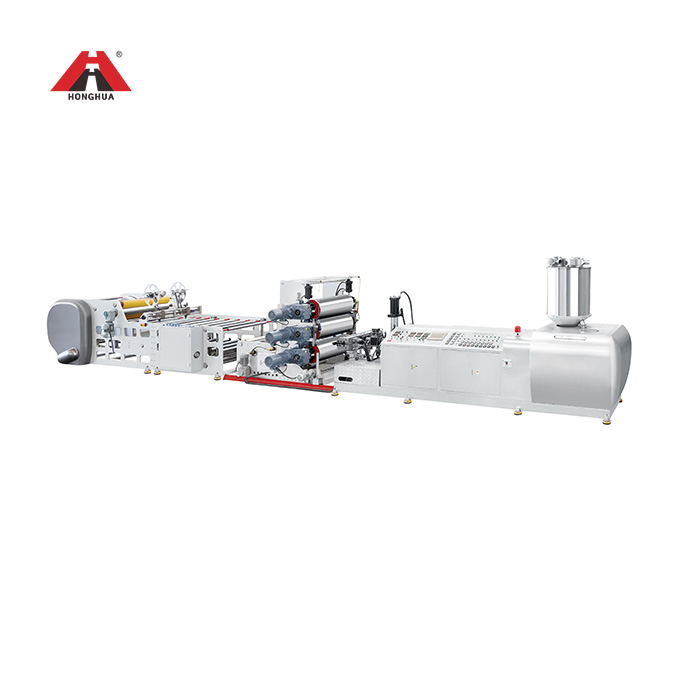
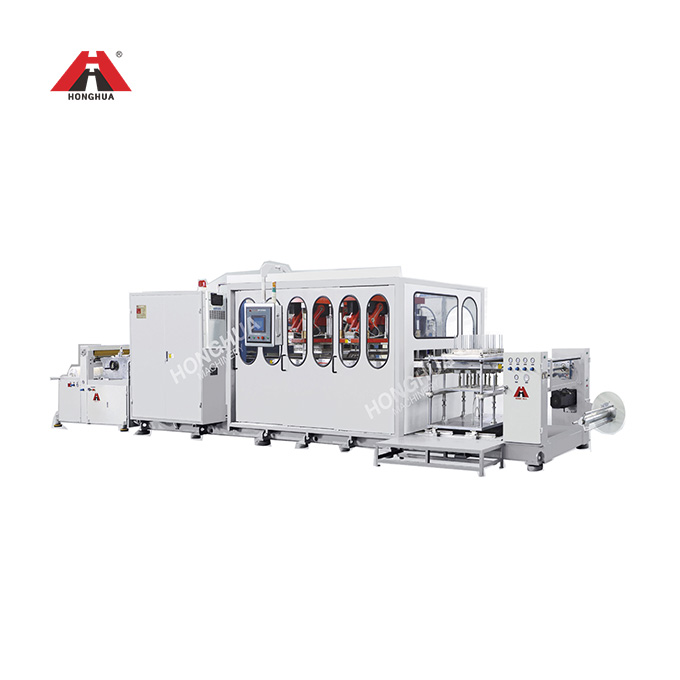
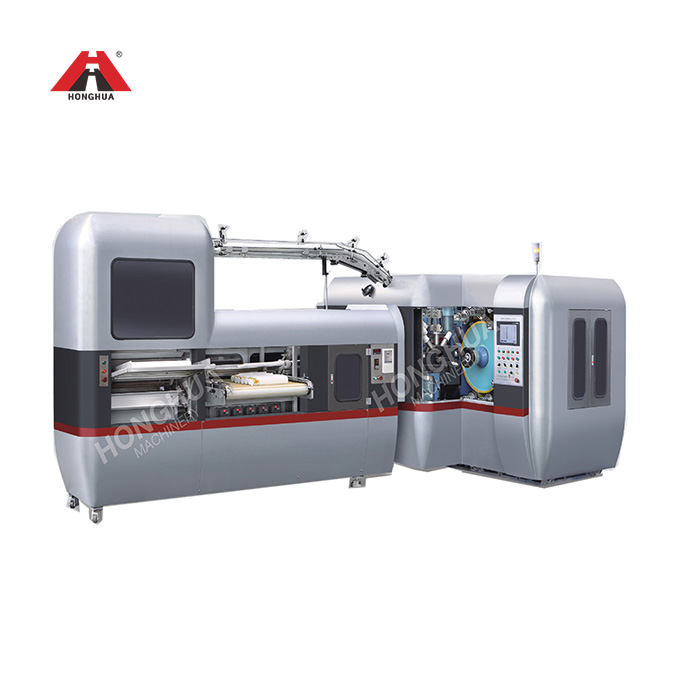
Clamping of Heavy-Gage Sheet Heavy-gage sheet iS usually supplied as cut.stacked and palleted sheet.The demand for large numbers of large,heavy-wall parts such as refrigerator door 1iners and vehicle Interior components、has led to the development of an in-line heavy-gage sheet extrusion and thermoforming concept(Fig.1.2)f161.The sheet extruder iS placed in-line with the thermoformer.thus obviating problems associated with handling Cut-sheet materials.Formers that USe discrete heavy.gage sheet are called cut-sheet formers.Cut-sheet clamping frames are usually held closed with mechanical spring-loaded toggle clamps or pneumatic hold-down bars.Shuttle clamps are also used. Heating of Thin-Gage Sheet There are three ways of heating sheet Conduction,where the sheet is placed in direct contact with the heating medium,such as a hot plate,Convection,where the sheet iS heated with hot air,and Radiation,where infrared heat from metal wires,ceramic plates,or gas-fired combus.tion is the primary means of heating the sheet. Thin-gage,roll-fed sheet is usually heated by passing the sheet between banks of infrared radiant heaters.Combinations of radiation and convection heating are used as well.These are detailed in Chapter 4.Most plastics formed today,such as PS,Pvc and ABS,are formed at relatively low temperatures such as 250°F to 450°F or 120℃ to 230℃. Heating Heavy-Gage Sheet Intense energy input from radiant heaters iS unwarranted and iS potentially problem for heavy。gage sheet.Conduction of the energy from the surface of the sheet to its interior controls the heating time.AS a result,heavy-gage sheet iS ft.equently heated with forced convection hot air or reradiated energy from fine mesh metal screens or hot plates.Heater types and temperatures are selected on the basis of optimizing the amount of energy transferred to the sheet per unit time. Shaping Thin-Gage Sheet In the earliest days of thermoforming,the rubbery sheet was mallually stretched or draped over a male mold.Drape forming or male mold forming.requires no forming pressure and no difierence in pressure across the sheet thickness.Certain aspects of drape forming are used today.whenever male portions of female molds are em. VaCHHDl forming is the application of differential pressure across the sheet thickness of up to 0.1 MPa or 1 5 lb/in2 or one atmosphere absolute.In modern commercial machines.the applied vacuum iS on the order of 0.05 to 0.09 MPa or 7.3 to 14 lbin2.Since thin-gage sheet surface-to-VOlume ratio iS very large.Thin-gage sheet loses heat to its surroundings very rapidly.AS a result.thin.gage sheet iS usually formed very rapidly fin seconds).Furthermore.more than one part iS formed at a time.Special clamps called cavity isolators are used to minimize nonuniformity in individual part wall thickness due to polymer pullin£from one cavity to another during forming.Foams are normally very resilient or stifr at their forming tempera.tures and SO matched die molding iS used. Shaping Heavy-Gage Sheet Drape forming and vacuum forming are common ways of stretching heavy-gage sheet as well.Usually the mold has a single cavity.Sheet manipulation or prestretching with air or with mechanical assists called plugs iS a common way of redistributing the plastic across the mold surface to minimize thin spots.In addition,pressure Jorming has been rediscovered Historically.steam pressure was used to force celluloid against mold surfaces.Air iS used today in place of steam.Although forming pressures to 3.5 MPa or 500 lb/in2 are used when shaping continuous fiber-rein.forced composites.the pressure forming range of 0.1 4 to 0.56 MPa or 20 to 80 Ib/in2 iS commercial with 1.4 MPa or 200 lb/in2 considered the practical upper limit. Pressure forming iS combined with vacuum forming to gain additional difierential pressure and to minimize air pockets between the mold and the sheet.Pressure forming is best suited to heavy-gage sheet forming into female molds.Higher forming pressures require more substantial mold construction.This increases the mold cost and the lcad time. Trimming the Thin-Gage Sheet Thin.gage sheet can be trimmed in the mold or in a separate in-line hydromechanical trimming device.A camel-back or hump-back trimmer is shown in line with a roll-fed former in Fig.1.3. Trimming the Heavy-Gage Sheet On occasion,heavy-gage sheet is also trimmed in the press.The more common trimming scenario is the transfer of the sheet from the forming press to a trimming fixture.Trimming follows one of the following: Manual with a hook.knife or hand-held router, Manual with a bandsaw、 Automatic with a multi-axis trimming fixture,or Automatic with a water jet or laser. Depth-of-Draw Historically,thermoforming rules-of-thumb are based on the depth-of-draw of a given polymer into a given mold configuration.The depth of draw concept is loosely understood among formers as the ratio of the depth a sheet could be drawn into a female mold to the minimum dimension at the rim.It is frequently given the notation h:d.Unfortunately,this definition is easily misinterpreted,is vague fbr non-cylindri-cal shapes。and does not truly describe the stretching process.0ther definitions based on areal draw ratio and linear stretching are more accurate.as discussed in Chapter 7.For reference.the areal draw ratio is the ratio of the area of the formed sheet to that of the unformed sheet.The linear draw ratio is the Iength of an imaginary line drawn on the formed sheet to its original length. |
|