Chinese Spanish Portuguese Arabic Russian
  • Home
  • About Us
  • News
  • Product
  • Clients
  • Exhibition
  • Product video
  • Feedback
  • Site Map
  • Contact
  •  
    navigation
    Latest News
    Technical
    Information

    Hot Click
    Thermoforming tool design guidelines
    Twin sheet forming
    Thermoplastic Thermoforming
    What is Plastic Thermoforming
    Automatic cup printing machine
    Choosing The proper forming parametres
    All the colours at once
    Plastics Machinery opportunities in the Russian market
    Hard chrome plastic mechanical shaft power
    Vacuum Forming
    Thermoforming
    Thermoforming Troubleshooting
    Vacuum Forming
    Vacuum Snap-Back
    Billow Forming
    Plug assist forming
    Free Forming
    Pressure Forming
    Drape Forming
    Stretch Forming
    Methods of Forming --One-Step forming
    Published:2009-7-3 14:53:44
    Methods  of   Forming
     
    In its simplest form ,thermoforming is the stretching of a heated rubbery sheet into a final shape. As the sheet is stretched against the mold surface, it stops
    drawing. As a result , the final part has thick walls where the sheet touched the mold first and thin walls where it touched last. In many thin-gage forming
    applications, the extent of sheet thatis stretching is small and so the areal draw ratio is small. The package integrity and durability are therefore uncompromised.
    Typical applications are in packaging areas such as blister and bubble packs, form/fill/seal packages and fast foodcontainers and picnic plates. If a high degree
    of stretching is needs, as with disposable drink cups or for heavy-gage sheet forming, simple stretching techniques are insufficient.. The methods of
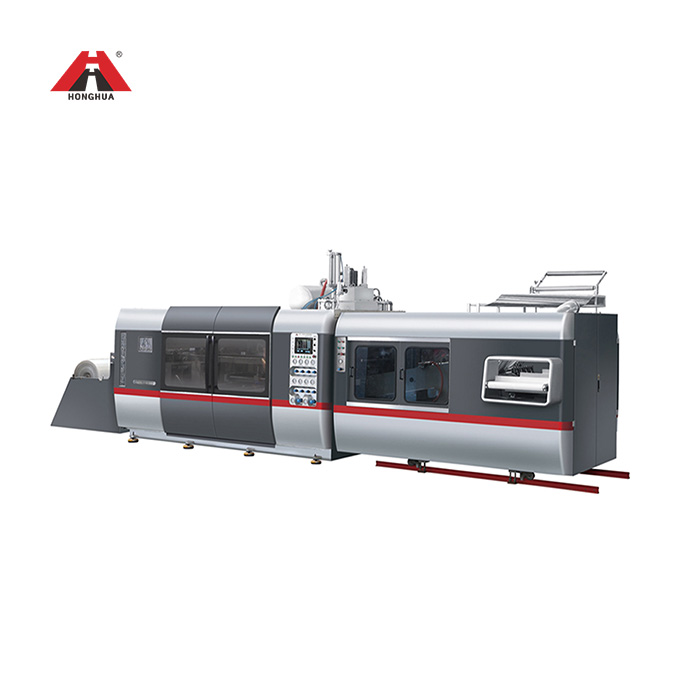
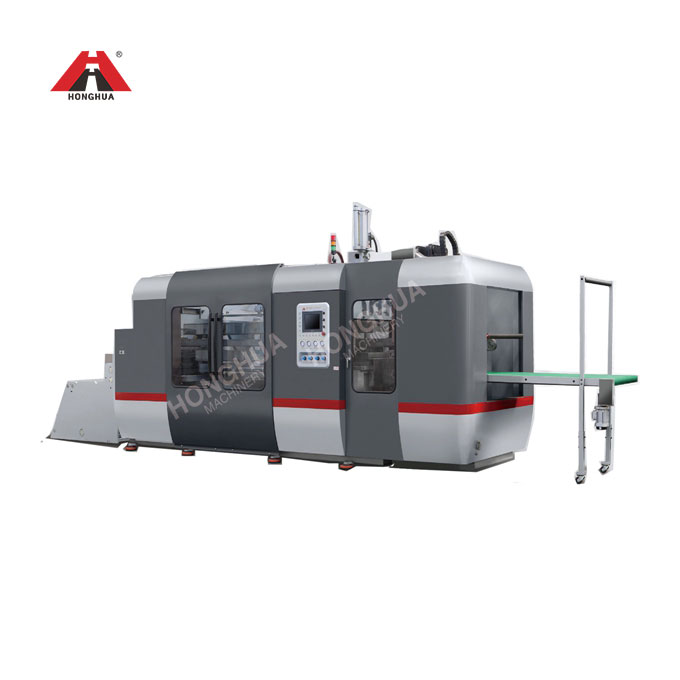
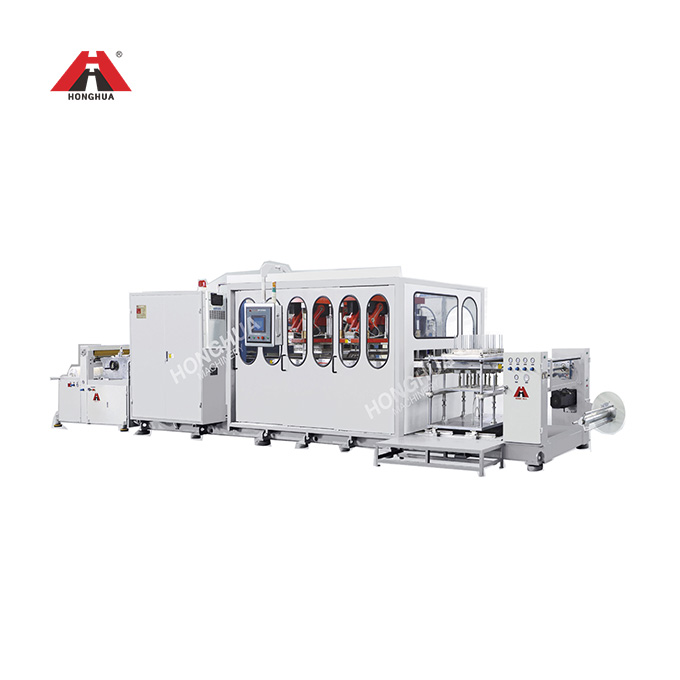
    forming are divided into the number of sequential steps needed to form the part once the forming temperature.   Thermoforming Machine
    One-Step forming
    There are at least five types of one-step forming:
    l         In drape forming,the clamped, heated rubbery sheet is either lowered onto the male mold or the mold is raised into the sheet. The sheet in contact with the
    mold does not stretch. For modern drape forming, the air trapped between the sheet and the mold is evacuated as the mold penetrates and stretches the
    sheet against the mold flange. Either vacuum or air pressure is used to produce the differential pressure needed to force the sheet against the male mold. In drape
    forming , the formed part has a thick bottom and thin sidewalls. The part is thinnest at the rim. Drape forming is also called male molding.  Cup Making Machine
    l         In vacuum forming,the clamped, heated rubbery sheet is sealed against the rim of the female mold. Vacuum is then applied. The differential pressure presses
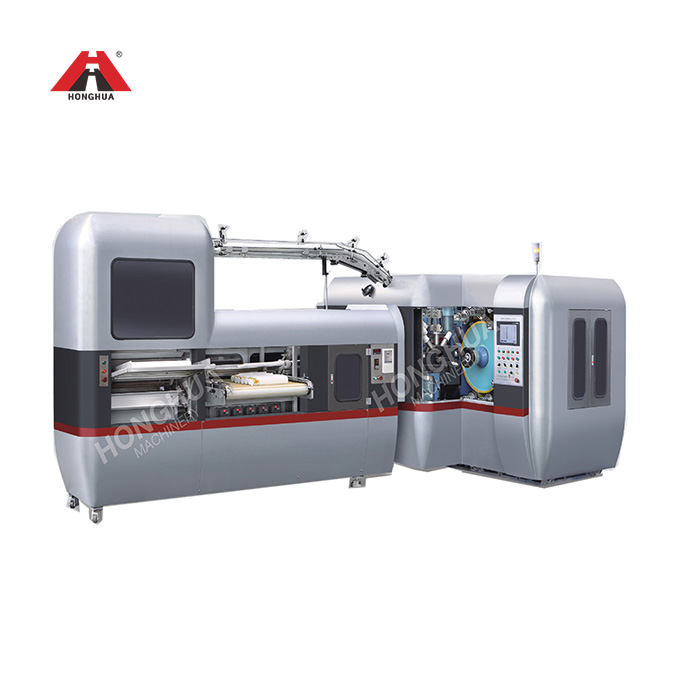
    the sheet against the surface. As noted before, the formed part has a thick rim and is thinnest in the bottom corners. The is also called cavity forming or female molding.     Printing Machine
    l         Pressure forming,is similar to vacuum forming.A pressure box is fitted over the sheet as it is held against the mold rim and positive air pressure is used to
    push the sheet into the mold corners. Since air pressure to 1.4 Mpa or 2001bf/in2 is used, the pressure box must seal against the free surface of the
    sheet. Pressure forming is used for difficult-to-form roll-fed thin-gage polymers such as PP and for production of highly detailed heavy-gage parts [18].
    l         In free blowing, the clamped heated rubbery sheet is stretched with air itto a free-form shape. The amount of air pressure is controlled with a photocell that
    senses the height of the expanding bubble. Sunce the environmental air is slightly cooler than the sheet, the sheet cools in the free-from shape. This techinque was
    pioneered for aircraft gun enclosures. Since the sheet does not touch a solid surface during forming, it remains mar-free. The bubble wall
    thickness is quite uniform execept near the clamping area. Freely blown roll-fed thin-gage bubbles are used for blister packs.   Automatic cup stacker
    l         Matched die molding, is a common way of forming shapes form relatively stiff polymers, such as PS foam or fill polymers. The clamped heated rubbery sheet is positioned between two mold halves. As the mold halves close,
    vacuum is applied to the female half of the mold halves. As the mold halves close,vacuum is applied to the female half of the mold to assist with forming. Part wall thickness depends on the mating tolerance of the two mold halves.Appreciable material movement is possible if applied forces are relatively large.
    Usually the applied pressures do not exceed about 1 Mpa or 150 1b/in and are usually about 0.34 Mpa or 50 1bf/in2.