Chinese Spanish Portuguese Arabic Russian
  • Home
  • About Us
  • News
  • Product
  • Clients
  • Exhibition
  • Product video
  • Feedback
  • Site Map
  • Contact
  •  
    navigation
    Latest News
    Technical
    Information

    Hot Click
    Thermoforming tool design guidelines
    Twin sheet forming
    Thermoplastic Thermoforming
    What is Plastic Thermoforming
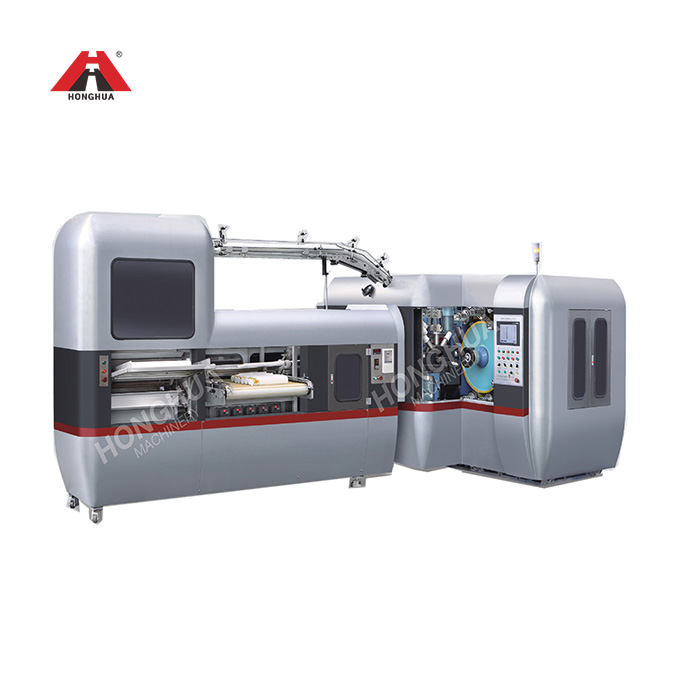
    Automatic cup printing machine
    All the colours at once
    Plastics Machinery opportunities in the Russian market
    Hard chrome plastic mechanical shaft power
    Vacuum Forming
    Choosing The proper forming parametres
    Thermoforming
    Thermoforming Troubleshooting
    Vacuum Forming
    Vacuum Snap-Back
    Billow Forming
    Plug assist forming
    Free Forming
    Pressure Forming
    Drape Forming
    Stretch Forming
    All the colours at once
    Published:2009-6-8 14:00:41
    DRY OFFSET is the only direct printing process where the complete and final multi-colour image is transferred to the substrate with a single impression. In the
    plastics industry, dry offset printing is the main process for the decoration of cups, pots and tubs, (injection moulded or thermoformed), used for the packaging of
    foodstuffs, such as yoghurt, margarine, creams, salads etc as well as their prospective closures. Pre-formed tubes for cosmetics or toothpaste, vials for
    pharmaceuticals, cartridges for sealants, buckets or pails for emulsion paints are also high volume applications for dry offset printing.

    The main printing processes used in packaging today, (litho, flexo, gravure, screen) involve multiple impressions, whereby each colour of an image, is printed on tothe substrate consecutively and in register. These can be described as 'wet-on-wet' processes, or, with between colour drying, 'wet-on-dry'. They can be in-line or
    multiple pass.

    Such an approach was not possible, with early technology, for direct printing on to three-dimensional containers, which have awkward shapes and varying
    dimensions, and so a different approach was taken: to transfer the final printed image, in one single impression.

    There is a similarity between the dry offset process and the well-known offset lithography process in that a rubber blanket is used to carry the image from the
    printing plate to the surface of the substrate. Dry offset should not be mistaken, however, for an offset system which merely eliminates the use of water to prevent
    ink transfer in the non-image areas. The plates are in fact similar to a letterpress plate, having a positive raised area. In this respect the process could be called
    indirect letterpress.

    The last element of a dry offset printing unit, is a blanket cylinder. This is a common impression cylinder, with a number of rubber blankets precisely affixed to it,
    generally by a double-sided adhesive tape. The blanket rotates past each printing plate cylinder, one after the other, building up the complete image (up to nine
    colours) on the single blanket. This complete image is then transferred, in one pass, directly on to the container side wall, or lid surface.

    Machine structure

    Each printing unit, comprises an inking unit and a printing plate cylinder. As mentioned, up to nine such combinations are spaced consecutively, around one
    side of the blanket cylinder.

    The inking unit generates an adjustable, thin, consistent layer of ink on the raised areas of the printing plate. The ink supply system comprises an ink fountain
    (reservoir). The metering of the ink is achieved by a doctor blade, adjusted by a series of metering screws against a fountain roll, not dissimilar to regular offset
    lithography. Similarly, the ink is transferred from the fountain roll to a series of oscillating rolls by a dab roll. The dab roll cycle is adjustable, depending on the
    quantity of ink which must be transferred to a series of oscillating metering rolls, which split down the ink layer. The inking train is completed by a number of rubber
    covered form rolls which ink up the printing plate.

    The modern printing plate is made from a photo-polymer plastic, backed by a zinc or steel plate. The production/development of the printing plate from the artwork
    to the colour separation, the screening, the exposure, etching etc is similar to the letterpress process used on narrow web label printing presses.

    More recently, developments have taken place with the Toray type of planographic printing plate. This particular approach, however, demands consistent andstable
    ambient conditions in terms of temperature control, and a dust-free environment. The current grades of plate tend to be short lived, but are relatively inexpensive.
    Several UK printers are pioneering this process.

    The printing plates can be fixed to the cylinder by clamping bars, or pre-punched in register with the image, and gripped on the cylinder, in register, with a pingripper
    mechanism. In this way, since all the printing plate cylinders are geared in register with each other, the complete, multi-colour image is pre-registered before start up.
    In the USA, magnetic cylinders are often used, eliminating the need for clamping or gripping mechanisms.

    The printing plate cylinders can be individually fine-adjusted while in operation, for both lateral and longitudinal register.

    Inks

    Previous generations of inks, were thermally dried, either by hot air or infrared ovens or tunnels. The vast majority of plastic cups, tubs, lids and tubes today, are
    'dried' by UV curing, either directly in the machine or in a small UV curing oven. The ink must be individually formulated to prevent 'back colouring' and contamination of the inking units.

    What does this mean? Since one common blanket, is inked up with all the colours, consecutively in one pass, there is a danger that the image in the area of colour
    overlap, will be picked off by the subsequent printing plate, and transferred through to the inking train, resulting in 'back colouring'. With this in mind, the inks
    are fine-tuned to resist this possibility.

    During the rotating cycle of the blanket cylinder, the lighter colour images are printed on to the blanket first, progressing to the final colour, generally black, in
    the last printing unit where colour overlap occurs. The lighter colours will have the higher green tack (resistance to be picked off the blanket) and the darker colours
    are smoother with a lower green tack level. This allows the blanket to retain the complete image.

    Product handling

    The peripheral equipment for the handling and transfer of the container throughout the printing cycle is designed specifically for the container design. Yoghurt potsor
    margarine tubs, for example are tapered wall containers, which readily stack inside each other. "Sticks' of such containers, are de-nested and automatically fed on to a
    rotating dial or 'spider' which is fitted with a series of mandrels. The mandrels are manufactured to the same diameter and taper as the cup or pot.

    Each position on the dial represents a specific function during the rotation of the dial, which rotates in perfect register to the blanket cylinder, and stops
    intermittently at each function point. Position 1 is feed on; position 2 pre-treatment; position 3 printing; position 4 UV curing; position 5 take-off.

    The mandrels are driven, and rotate during the fraction of a second, that the dial stops cycling. The blanket cylinder, can be adjusted to the mandrel, at the printing
    position, for both pressure and angle (according to the taper of the cup).

    Pre-treatment and curing

    With the majority of plastic materials, it is necessary to treat the surface of the container prior to printing, to achieve the necessary adhesion. This pre-treatment
    can be done either with a gas flame or corona discharge. The former is preferred for thick wall containers (such as injection mouldings)and the latter for thinner wall
    products (thermoformed). A surface tension of around 40-42 dyns is preferred.

    The conditions at the printing position are important to achieve optimum image transfer. With tapered cups especially, the screen count of the printing plates must
    take into account the mean diameter of the cup, and be adjusted accordingly. The quality of the cup ill terms of consistent wall thickness can be accommodated to
    some extent by the compressibility and quality of the blanket chosen.

    With round containers, the inks are cured on the mandrel by a UV lamp. The mandrel is driven to rotate several times under the lamp to ensure full exposure
    and good cure. Rectangular containers are taken off the mandrel, while wet, and cured in a UV tunnel. Different types of lamp are available. For example when
    printing polystyrene foam cups, a 'cold UV" system is used, to prevent distortion or melting the cup.

    The modern cup printer for, typically, yoghurt pots, will print up to nine colours at speeds up to 600 cups/minute, depending on the shape of the cup andcomplexity of the graphics. It is difficult to envisage direct printing on to a rectangular margarine container with a rotating blanket, but it is achieved, with images eve
    around the comers. As with flexographic printing, dry offset has come a long way in the last decade. The threats from in-mould labelling, shrink sleeve, self adhesiveor wrap-around labelling have failed to replace direct printing as the most cost effective method of decorating containers.