Chinese Spanish Portuguese Arabic Russian
  • Home
  • About Us
  • News
  • Product
  • Clients
  • Exhibition
  • Product video
  • Feedback
  • Site Map
  • Contact
  •  
    navigation
    Latest News
    Technical
    Information

    Hot Click
    Thermoforming tool design guidelines
    Twin sheet forming
    Thermoplastic Thermoforming
    What is Plastic Thermoforming
    Automatic cup printing machine
    Choosing The proper forming parametres
    All the colours at once
    Plastics Machinery opportunities in the Russian market
    Hard chrome plastic mechanical shaft power
    Vacuum Forming
    Thermoforming
    Thermoforming Troubleshooting
    Vacuum Forming
    Vacuum Snap-Back
    Billow Forming
    Plug assist forming
    Free Forming
    Pressure Forming
    Drape Forming
    Stretch Forming
    Thermoforming Machinery --Heating Source
    Published:2009-7-4 9:21:12
    Thermoforming Machinery
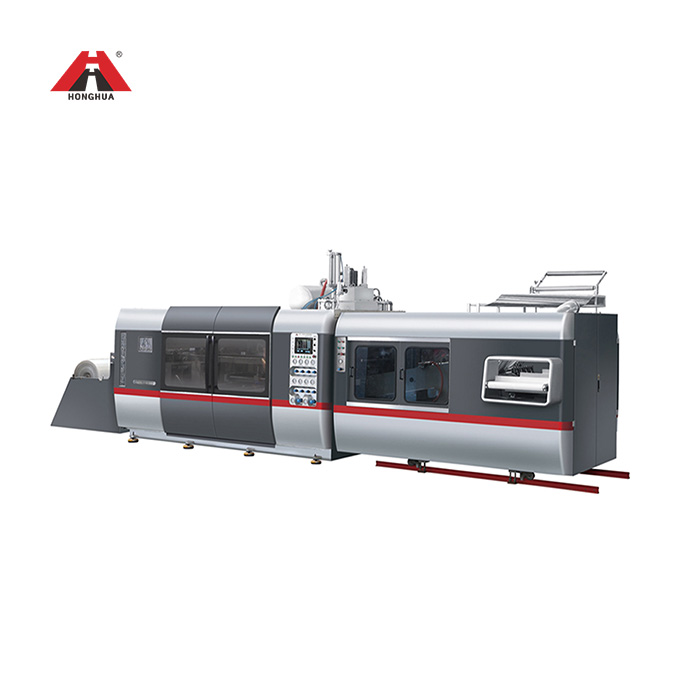
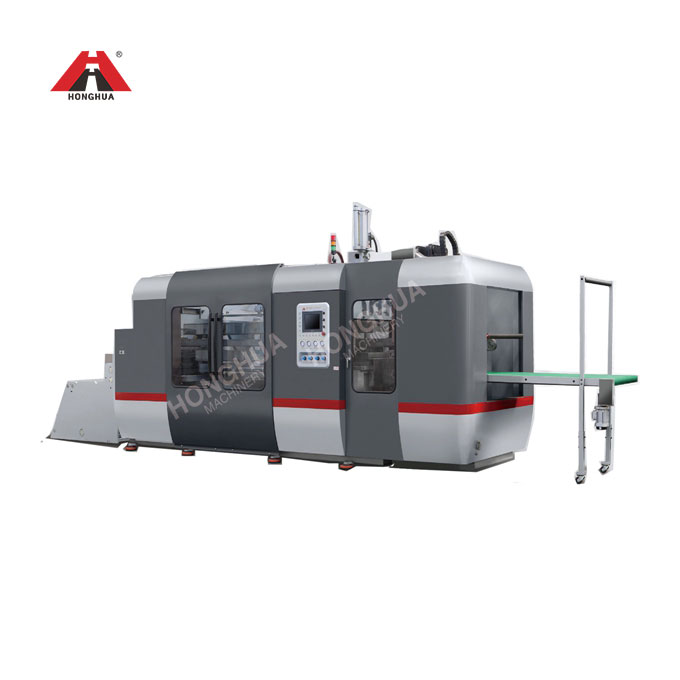
    As noted, there are two general thermoforming categorice. Typically, heavy-gage sheet is handled as discrete cut sections and the forming equipment are called cut-
    sheet thermoformers. Thin-gage sheet is handled in continuous rolls and the forming equipment is usually called roll-fed thermoformers. The equipment in both
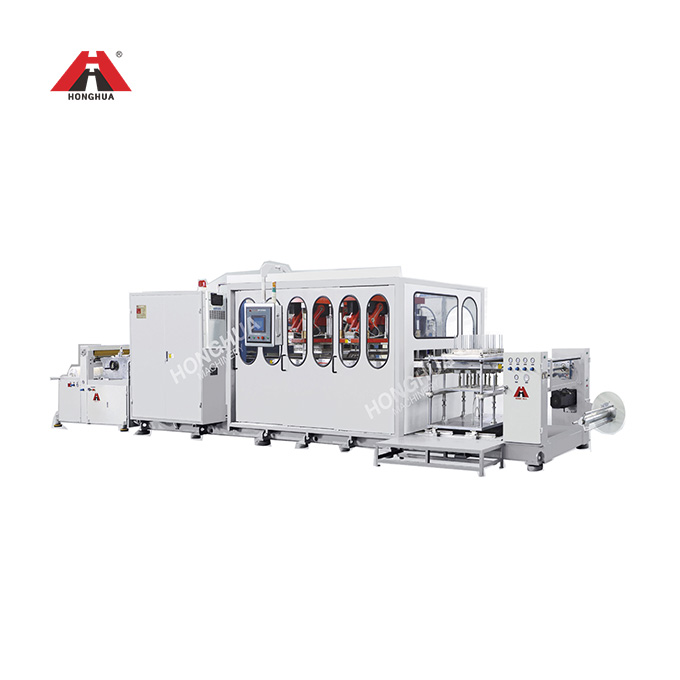
    categories includes:    Thermoforming Machine
    l         Some form of sheet handling device,
    l         A way of moving the sheet from one station to another,
    l         A means of controlling the various elements that allow the sheet to be heated,formed and moved form station to sation,
    l         A sheet heating oven,
    l         A vacuum system,
    l         A forming press, and
    l         A forming part removal region.
    In addition, the equipment many include:
    l         Some form of prestretching such as:
                 Preblowing or
                 Plug assist
    l         A pressure system
    l         A trimming press, and
    l         Some form of trim removal.
    Certain guidelines pertain to both categories of forming equipment. Table 1.7 gives an overview for thermoforming equipment in general [20]. Some of these are summarized
    below.  Cup Making Machine
     Heating Source
    The various heating methods are detailed in Chapter 3. Sheet temperature should be controlled to within ±5℃ or ±10℉. During transfer to the forming station, the
    sheet temperature drop should not exceed 5 to 10℃ or 10 to 20℉. Infrared heating is most popular today. The various heating methods include[21]:
    l         Simple nickel-chrome heating wires,
    l         Metal resistance rods, sometimes called calrods,
    Table 1.7 General Soeifications for Thermoformers
    Platen size, W×L(in×in or mm×mm)
    Maximum depth of draw(in or mm)
    Forming process (vacuum, pressure, matched, mold, plug against. Twin-sheet capability)
    Platen power drive (penumatic, hydraulic, mechanical, electric)
    Indexing power drive (penumatic, hydraulic, mechanical, electric)
    Floor space(ft or m)
    Heater type (metal rod, quartz, ceramic, radiant, gas, nichrome wire)
    Heater controls (proportioning, percentage timers, timer controlled, zone controlled, programmable controlled, machine controlled)
    Maximum heater output(kw/ft or kw/m)
    Special features (purpose, type such as shuttle or rotary, number of stations, number of ovens,etc.)
     
    l         Ceramic bricks or tile,
    l         Quartz heaters in rod, spril or square plate form,
    l         Direct gas-fired catalytic burners,
    l         Indirect gas-fired catalytic burners,
    l         Heat lamps,
    l         Quartz glass plates,
    l         Halogen bulbs, and
    l         Wire or rod heated metal plates.
    Heater surface temperature is usually measured with thermocouples, thermistors or infrared pyrometric devices. Heating wires and resistance wires are inexpensive
    but oxidize rapidly and so lose heating effciency. Quartz heaters are quite efficient, can be turned on and off like bulbs but are quite expensive and fragile. Quartz is
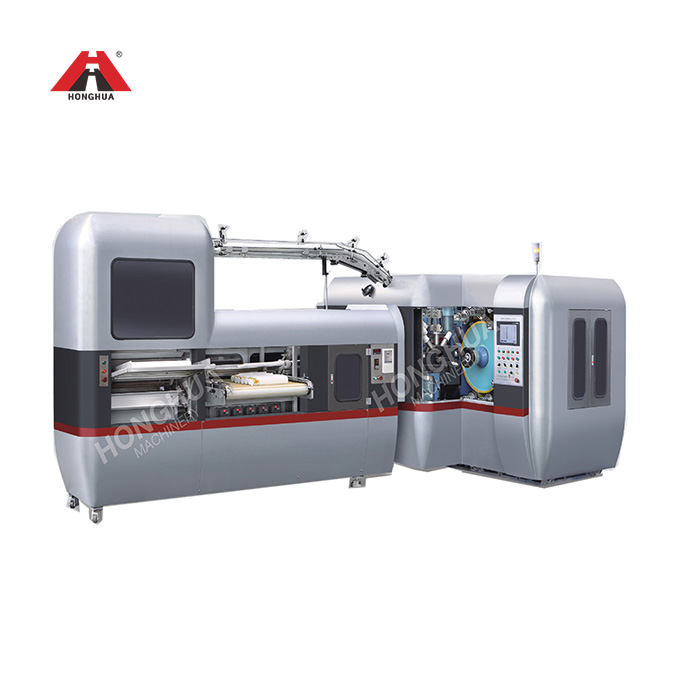
    preferred for high temperature and “shaped heating”needs as described in Chapter 3.        Printing Machine
      Sheet is also heated by direct contact with a hot metal plate (trapped sheet heating), by placing the sheet in a hot air oven (convection heating), or by passing
    it through a high-frequency electromagnetic filed (RF or microwave heating). In the last case, the plastic must zbsorb the high-frequency energy. PVC is heated by radio-frequency energy in the flow-molding embossing process. Other polymers
    must be doped with“lossy”substances such as inorganic hydrates or even carbon black.     Automatic cup stacker
      There are certain elements that pertain to the ovens for all forming presses. For example;
    l         There must be a way of separating the sheet form the heater source at shut-down. Baffles and dampers are used for heavy-gage sheet and fly-open and
    extracting shuttle are used for thin-gage sheet.
    l         There should be adequate means for rapid replacement of burned-out heater elements on both top and bottom heater banks.